2012 Fruit Trees at Adams Gardens

Below is a list of fruit trees we have in stock for the 2012 season.

Download a .pdf of the list here.

ALL-IN-ONE GENETIC DWARF ALMOND – No.1 almond for home orchards. Heavy crops of soft-shell nuts with sweet, flavorful kernels. Hot summer required to ripen. 15 ft. tree, very winter & frost hardy. 300 to 400 hours. Self-fruitful. Pat. No. 4304. (Zaiger)

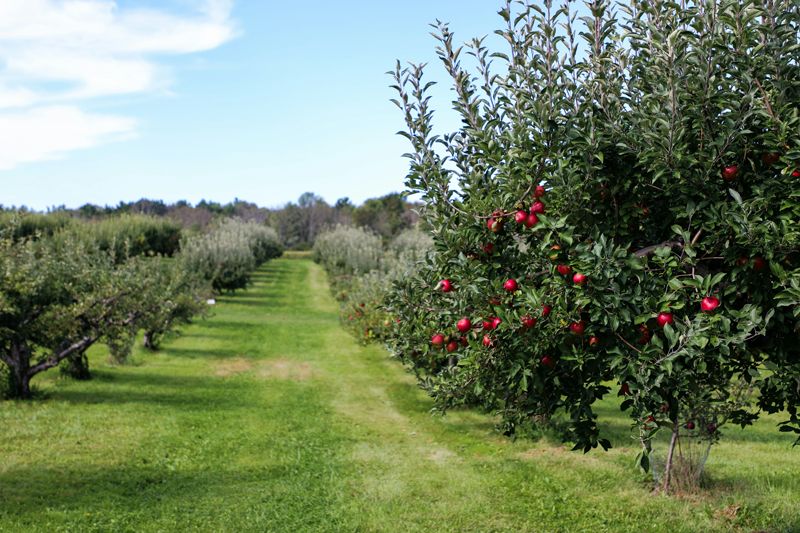
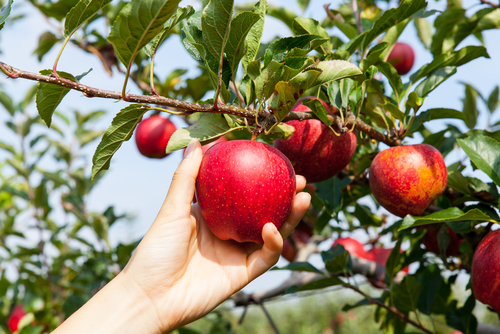
GALA (Original Gala) APPLE – Wonderful dessert apple from New Zealand. Crisp, nice blend of sweetness and tartness, rich flavor. Skin reddish-orange over yellow. Early harvest, 2-3 weeks before Red Delicious. Good pollenizer for other varieties. 500 to 600 hours. Self fruitful.

GOLDEN DELICIOUS APPLE – Long-time favorite for its sweetness and flavor. Reliable producer, adapted to many climates. Pollenizer for RedDelicious. Mid-season harvest (September in Central Calif.). 700 hours. Self fruitful.

GRANNY SMITH APPLE – From New Zealand. Large, late, green, all-purpose. Crisp, tart, excellent keeper. Requires long summer. Thrives in hot climates. 400 hours. Prolonged bloom: good pollenizer for other apples. Self-fruitful. USDA Zones 6 – 9

GRAVENSTEIN (Green Gravenstein) APPLE – Famous for sauce and baking, also used fresh. Crisp, juicy, flavorful, tart. Early bloom, early harvest. 700 hours. Pollen-sterile, pollenizer required: Empire, Fuji, Gala, Red Delicious.

GRAVENSTEIN (Red Gravenstein) APPLE – Famous for sauce and baking, also used fresh. Crisp, juicy, flavorful, tart. Green with red stripes. Early bloom, early harvest. 700 hours. Pollen-sterile: pollenized by Empire, Fuji, Gala or Red Delicious.

HARLARED APPLE – Late September to early October. Medium size, striped red. Firm texture, tart flavor. ‘Haralred’ is a redder form of ‘Haralson’. Fresh eating, cooking

IDAHO WALNUT – Cold hardy carpathian-type. Large, sweet, high quality kernel. Bears young and heavy. Vigorous tree. 700 hours. Self-fruitful. (Rootstock: NCB walnut.)

HONEYCRISP APPLE – Winter hardy tree from the University of Minnesota. Fruit is crisp and juicy with an aromatic flavor. Stripped red over yellow color. Stores well. Ripens mid August. Pollenized by Gala, Granny Smith, Empire, McIntosh and Red Delicious. USDA Zones 3 – 8

JONAGOLD APPLE – Superb flavor – connoisseurs’ choice. A cross of Jonathan and Golden Delicious. Yellow with red-orange blush. Crisp, juicy, subacid, all-purpose. 700 to 800 hours. Pollenized by Fuji, Gala, Granny Smith or Red Delicious, but not Golden Delicious.

MCINTOSH (Rogers McIntosh) APPLE – Round, bright to dark red over green, superb quality in cool climates. Crisp, aromatic, subacid, sweet. Dessert/cooking. Early harvest. 900 hours. Partly self-fruitful, or pollenized by Red Delicious, Gala, or other.

PINK LADY® APPLE (Cripps Pink) – Hot climate apple from Western Australia. Very crisp, sweet tart, distinct flavor, good keeper. Skin reddish pink over green when ripe. White flesh resists browning. Harvest begins late October in Central CA., about three weeks after Fuji. Self-fruitful. 300-400 hours. (Pat. No. 7880). USDA Zones 6 – 9

RED DELICIOUS APPLE – Long-time favorite apple: sweet, crisp and flavorful. Late summer/early fall harvest -pick while still crisp. Good pollenizer for most other apples. Pollenized by Granny Smith, Golden Delicious, Fuji, Gala.

RED FUJI APPLE (BC#2) – Redder skinned bud sport of Fuji. Sweet, very crisp and flavorful, excellent keeper. Ripe September October in Central CA. Excellent pollenizer for other apple varieties. Self-fruitful. USDA Zones 5 – 9

WINESAP (Stayman Double Red Winesap) APPLE – Long-time favorite late red apple. Juicy, smooth texture. Lively flavor, used fresh or cooked. 800 hours. Pollen-sterile, pollenized by Red or Golden Delicious, Fuji, Gala, Liberty.

YELLOW TRANSPARENT APPLE – Long-time favorite cooking apple for the very early summer (June to early July in most climates). Crisp, juicy and flavorful: excellent for sauce and pies, also used fresh and for drying. Skin of fully ripe fruit is pale yellow, waxy, thin, transparent. In hot summer climates especially, begin picking while fruit is still green and tart. Season lasts 3-4 weeks. Very winter hardy, vigorous, dependable tree begins bearing very young. Most fruit is borne on short, heavily-spurred branches. Originated in Russia, introduced to the U.S. in 1870. Estimated chilling requirement 800 to 1000 hours.

CANADIAN WHITE BLENHEIM APRICOT – Taste test winner! One of the all-time top-scoring apricots in Dave Wilson Nursery blind taste tests. Syrupy sweet white flesh with firm texture. 500 to 700 hours. Partly self-fruitful: biggest crops if cross-pollenized by another apricot.

CHINESE (MORMON) APRICOT - Cold hardy, frost hardy, sets heavy crops of small to medium size sweet fruit. Recommended for difficult, spring frost prone climates. 700 hours. Self-fruitful. USDA Zones 4 – 7

GOLDCOT APRICOT – Productive, even in cold, humid climates. Medium-sized fruit with golden yellow skin and yellow-orange, freestone flesh. Juicy, with tangy flavor, used fresh and for freezing: and canning. Originated in Michigan, introduced in 1967. 800 hours. Self-fruitful.

HARCOT APRICOT – From Canada. Frost hardy late bloom. Resists brown rot and perennial canker. Medium to large fruit ripens early to mid-June in Central CA. Sweet, juicy, rich flavor one of the best. 700 hours. Self-fruitful.

TILTON APRICOT – No. 1 apricot for canning, excellent fresh or dried as well. Medium to large, firm, rich flavor – one of the best. Widely adapted. Early July in Central CA. 600 hours. Self-fruitful. USDA Zones 5 – 9

FLAVOR DELIGHT APRIUM® INTERSPECIFIC – Resembles an apricot but with a distinctive flavor and texture all its own. Pleasant, lingering after taste. Early June. Bigger crops if pollenized by any apricot. Estimated chilling requirement: 200 to 300 hours. (Zaiger)

BING CHERRY – Large, firm, juicy, sweet, nearly black when ripe superb flavor, the No. 1 cherry. Mid-season. Large vigorous tree. Pollenized by Black Tart, Van, Rainier and Lapins. Also Stella in colder climates. 700 hours. USDA Zones 5 – 9

BLACK TARTARIAN CHERRY – Medium-sized, nearly black, sprightly flavor, early season. Vigorous, productive tree. Pollenizer required – interfruitful with all popular sweet cherries. Estimated chilling requirement: 700 hours.

LAMBERT CHERRY – Large, black, late harvest. Highest quality, rivaling Bing. Less susceptible to cracking due to later season. Estimated chilling requirement: 800 hours. Pollenized by Van, Rainier, or Black Tartarian.

LAPINS CHERRY – Self-fruitful, dark red sweet cherry from Canada. Large, firm, good flavor. Similar to Van in color, Bing in shape. Sometimes sold as “Self-fertile Bing.” Ripens 4 days after Bing. 400 hours or less. USDA Zones 5 – 9

MONTMORENCY SOUR CHERRY – Large, light red skin, yellow flesh. Perfect for cobblers, pies, etc. Extremely winter hardy. Very heavy bearing tree. Self-fertile.

RAINIER SWEET CHERRY – Large, yellow with red blush. Sweet and flavorful. Very cold hardy. Mid-season harvest. 700 hours. Pollenized by Van, Lambert, Lapins, Black Tartarian & Bing. USDA Zones 5 – 9

STELLA CHERRY – Self-fruitful – no pollenizer needed. Large, nearly black, richly flavored sweet cherry. Similar to its parent, Lambert. Late harvest. Pollenizes Bing, except in mild winter climates. Estimated chilling requirement: 400 hours

UTAH GIANT CHERRY – Best sweet cherry, according to Utah folks. Larger, firmer, more flavorful than Bing or Lambert. Good canner. Does not double. Pollenizer required — Bing, Lambert, Rainier, Van. Estimated chilling requirement: 800 hours

KING (Desert King) FIG – Light green ‘white’ skin, strawberry colored pulp. Rich flavor, excellent fresh-eating quality. Large breba (spring) crop. Later crop is light in hot climates, heavier in coastal climates. Prune only lightly, occasionally. (Heavy winter pruning removes breba crop.) 100 hours. Self-fruitful.

VIOLETTE de BORDEAUX FIG – Small to medium size purple-black fruit with a very deep red strawberry pulp, a distinctive sweet rich flavor. Brebas are pyriform with a thick, tapering neck; main crop figs are variable often without neck. Medium eye. Excellent fresh or dried. Breba crop, hardy. Good for container culture or small spaces. Zones 5-10.

DOUBLE DELIGHT NECTARINE – Sensational fruit consistently the best flavored yellow nectarine plus magnificent, double pink flowers. Dark red skinned, freestone fruit is sweet, with unusually rich flavor very high scoring in taste tests. Heavy bearing tree. Harvest early to mid-July in Central CA. 300 hours. Self-fruitful. (Zaiger)

FANTASIA NECTARINE – Popular, large, yellow freestone. Early harvest fruit is firm ripe and tangy, later harvest is sweet, with rich flavor: high scoring in taste tests. Late July/early August in Central CA. 500 hours or less. Self-fruitful.

HONEY KIST NECTARINE – Early ripening yellow nectarine with high sugar and low acid (no tartness). Harvest begins late June in Central CA., (Begin picking before the fruit begins to soften; the subacid varieties have the advantage of being good to eat before they reach peak ripeness.) Self-fertile.

HARKO NECTARINE – Sweet, firm, yellow, semi freestone. One of the highest scoring nectarines in DWN fruit tastings. Cold-hardy Canadian variety has showy, large, single pink flowers. Ripens with Redhaven Peach in early July in central California. Tolerant of bacterial spot and brown rot. 800 hours. Self-fruitful.

INDEPENDENCE NECTARINE – Bright red skin, firm yellow freestone. Rich flavor, tangy and sweet, one of the best. Consistently very high scoring in taste tests. Winter and frost hardy, very reliable producer. Self-fertile.

JOLLY RED GIANT NECTARINE – Very large fruit to 3 1/2″ or more if properly thinned. Freestone, delicious flavor. Skin bright orange-red over yellow. Mid-July in central California. Estimated chill requirement: 400 to 500 hours. Self-fruitful.

MERICREST NECTARINE – Very cold hardy, frost hardy, late bloom. Crops after sub-zero winters. Large, red-skinned yellow freestone, rich tangy flavor – very high scoring in taste tests. Highly recommended. Mid-July in central California. 800 hours. Self-fruitful.

SPICE ZEE NECTAPLUM® -  The first Nectaplum® from Zaiger Hybrids. SpiceZee packs a pile of amazing fruit into an attractive tree for the home gardener. It is slightly acidic and loaded with sugar giving it a spicy sweet flavor. One can detect both Plum and Nectarine traits with ease. Along with great flavor, Spice Zee is a beautiful ornamental tree with a tremendous spring bloom followed by dark red leaf in the spring that matures to a rich green-red in late summer. This variety is self-fruitful and very productive. Estimated chill requirement: 200 to 300 hours. Patent #13503

DONUT (Stark Saturn) PEACH – Also called Saucer or Peento Peach. Unique white-fleshed fruit with a sunken center (shaped like a doughnut). Sweet, with a mild flavor described by some as almond-like. Ripens late June to early July in Central Calif. Estimated chill requirement: 200 to 300 hours. Self-fruitful.

ELEGANT LADY PEACH – Well known fresh-market peach, introduced about 1979. Large, firm, yellow freestone (bright red at pit). Red over yellow skin. High fruit-tasting scores: excellent flavor, balanced sugar & acid. Harvest late July in central California. Estimated chilling requirement, 700 – 800 hours. Self-fruitful

ELBERTA PEACH – Famous yellow freestone. Classic, rich, peach flavor: high scoring in taste tests. Use fresh, canned or cooked. Ripe late July/early August in Central CA, up to 3-4 weeks later in colder climates. 600 hours. Self-fruitful.

FROST™ PEACH – Resistant to peach leaf curl (10-year trials at Washington State U.). Delicious yellow freestone. Slight red blush over greenish yellow to yellow skin. Heavy bearing, excellent for canning or eating fresh. July. Showy pink bloom in spring. 700 hours. Self-fruitful.

GARDEN GOLD MINIATURE PEACH – Delicious yellow freestone, more vigorous than other miniatures. Later bloom less susceptible to frost damage. Showy blossoms. Self fertile.

GIANT ELBERTA PEACH – August; self-fertile; high quality fruit; freestone

HALEVAVEN PEACH – From a cross of J.H. Hale and Redhaven–Winter & frost hardy. Large, red skin, excellent flavor, freestone, mid-season. Dessert/can/freeze. 900 hours. Self-fruitful.

HONEY BABE MINIATURE PEACH – Sweet, yellow freestone, rich peach flavor. Heavy bearing 5 foot tree. Excellent choice for home orchard. Self-fertile.

J. H. HALE PEACH – Old variety, still one of the best. Very large, firm, superb flavor. Fresh/canned. Ripe August 1st in central Calif. Excellent frost hardiness. 800 hours. Another nectarine or peach needed to pollenize.

O’HENRY PEACH – Popular fresh market yellow freestone now available for home planting. Large, firm, full red skin, superb flavor. Ripens early to mid August in Central CA. Good for freezing. Strong, vigorous, heavy bearing tree. 750 hours. Self-fruitful.

RANGER PEACH – One of the best late-blooming/frost hardy peaches for cold climates. Medium size, full-flavored, high quality yellow freestone. Mid-season, 1 week after Redhaven. Fresh/can/freeze. 900 hours. Self-fruitful.

REDHAVEN PEACH – World’s most widely planted peach. High quality yellow freestone. Ripens early July in Central CA. Frost hardy. Fresh/freeze. 800 hours. Self-fruitful.

REDSKIN ELBERTA – Cross of Redhaven and Elberta. Excellent quality all-purpose yellow freestone. Frost hardy. Ripens August lst in central CA. Also called Redskin. 850 hours. Self-fruitful.

RELIANCE PEACH - Late blooming. Very cold hardy/frost hardy. Sweet, flavorful yellow freestone. Best choice for climates having severe cold in winter and spring. Harvest 2-3 weeks before Elberta. Showy bloom. 1000 hours. Self-fruitful

SUGAR LADY WHITE PEACH – New white flesh freestone, already a favorite at fruit stands. Sweet, mild flavor, no tartness, very firm. Beautiful dark red skin. Harvest mid-July in central Calif. 700 hours. Self-fruitful. Pat. No. 7532. (Zaiger)

WHITE LADY WHITE PEACH – Among the best of the low acid/high sugar white peaches a farmer’s market favorite. Red skinned fruits are medium to large, very firm, freestone. Introduced in 1986. 800 hours. Self-fruitful. (Expired Pat. No. 5821) (Zaiger)

BARTLETT PEAR – World’s most popular pear. Early mid-season, high quality, tolerates hot summers. 500-600 hours. Self-fruitful in most climates of Western U.S. Elsewhere, pollenized by Bosc, D’Anjou, Winter Nelis.

BLAKE’S PRIDE PEAR – A distinct blend of sugars, acids and other flavors give Blake’s Pride a rich, aromatic taste. This yellow and light-golden pear was developed by horticulturalist Richard Bell with the ARS Appalachian Fruit Research Station in Kearneysville, West Virginia. This excellent eating pear also is resistant to fire blight. Ripens 10 to 14 days after Bartlett.

BOSC PEAR – Long & narrow shape, brown skin. Superb quality, one of the best. Harvest late October. Fresh/cooked. Susceptible to fireblight in warm, moist climates. Estimated chill requirement: 500 to 600 hours. Pollenized by Bartlett or other pear.

HARROW DELIGHT PEAR – Fireblight-resistant, with fruit similar to Bartlett. Yellow skin with attractive red blush. Smooth, fine flesh is especially flavorful. Ripe two weeks before Bartlett. Heavy-bearing tree. Introduced in 1982 (Ontario, Canada). 800 hours. Interfruitful with Bartlett, Bosc, D’Anjou and Moonglow.

SENSATION RED BARTLETT PEAR – High quality Bartlett-type pear fruit with attractive red skin. Relatively small tree. Self-fertile.

SUMMER CRISP PEAR – Developed at the University of Minnesota in 1986 as an early ripening pear with the crunch and juiciness of an Asian pear. These are medium size fruit with sweet crisp flesh, and a slightly aromatic flavor. They are a refreshing summer treat. Reported Fireblight free.

WARREN PEAR – Excellent quality dessert pear and highly resistant to fire blight. Medium to large, long-necked fruit with pale green skin, sometimes blushed red. Smooth flesh (no grit cells) is juicy and buttery with superb flavor. Good keeper. Cold hardy to -20°F. From Mississippi. 600 hours. Self-fruitful

HOSUI ASIAN PEAR – High-scoring in taste tests: perhaps the tastiest Asian pear. Large, juicy, sweet, flavorful, refreshing, crisp like an apple. Brownish-orange russeted skin. Harvest early to mid-August in Central CA. Estimated chill requirement: 300 to 400 hours. Pollenized by Shinko, Chojuro, Bartlett, or 20th Century.

SHINSEIKI ASIAN PEAR – Juicy, sweet, refreshing, crisp like an apple. Easy to grow. Keeps well. Harvest late July/early August in Central Calif. Bright yellow skin. Vigorous, heavy bearing (usually by 2nd year). Estimated chill requirement: 250 to 300 hours. Self-fruitful.

BURGUNDY PLUM – Maroon colored skin and semi freestone flesh. Sweet, with little or no tartness and a very pleasing, mild flavor. High taste test scores. Prolonged harvest, mid-July to mid-August in Central CA. Very productive. Narrow, upright habit. 300 hours. Self-fruitful.

EARLY ITALIAN PLUM/PRUNE – Similar to Italian, but sweeter, slightly larger and more productive. Shorter growing season requirement.

ELEPHANT HEART PLUM – Home-orchard favorite-large, heart-shaped fruit with sweet, juicy, richly flavored, firm red flesh. Dark reddish-purple mottled skin. Long harvest season-September in Central Calif. Hardy, heavy bearing. Estimated chill requirement: 500 hours or less. Pollenize with Beauty or Santa Rosa.

GREEN GAGE PLUM – European plum, later blooming than Santa Rosa and other Japanese types. Long time favorite for dessert, cooking canning. Tender, juicy rich flavor. Self-fertile.

SANTA ROSA PLUM – Most popular plum in CA. & Arizona. Juicy, tangy & flavorful. Reddish purple skin, amber flesh tinged red. Late June in Central CA. 300 hours. Self-fruitful.

SENECA EUROPEAN PLUM – Large reddish-purple fruit with very sweet, crisp, yellow freestone flesh. Resists brown rot and cracking. Used fresh and for canning and drying. Vigorous, productive, upright tree. Pollenized by another European plum.

DAPPLE DANDY PLUOT® INTERSPECIFIC – Taste test winner. Ranks with Flavor King and Flavor Supreme Pluots® as best flavored fruit at Dave Wilson Nursery tastings. Creamy white and red fleshed freestone with wonderful plum apricot flavor. Skin greenish yellow with red spots, turning to a maroon and yellow dapple. August harvest in Central CA. 400-500 hours. Pollenized by Flavor Supreme Pluot®, Flavor King Pluot®, Santa Rosa, Catalina or Burgundy Plum. (Pat. No. 9254) (Zaiger)

FLAVOR KING PLUOT® INTERSPECIFIC – Taste test winner. Unique plum apricot hybrid with sensational bouquet and sweet, spicy flavor. Reddish-purple skin, crimson flesh. Harvest mid August in Central CA. Naturally small tree. 400 hours or less. Pollenized by Flavor Supreme or Dapple Dandy Pluot® and Santa Rosa or Late Santa Rosa plum. (Pat. No. 8026) (Zaiger)

Christmas Trees Now in Stock

Our shipment of live (potted) and cut Christmas trees are in stock and ready for you to take home!  Come visit us for great selection and knowledgeable, friendly service.  Mention that you saw this post on our website to receive $5 off your tree.

Special Holiday Hours:
9am-6pm Monday – Thursday
9am-8pm Friday & Saturday (Dec. 2-3 & Dec. 9-10 ONLY)
10am-5pm Sunday

Planting to Attract Wildlife

Adams Gardens Plants

As spring approaches you may be considering what you want to plant in your gardens and flowerbeds. If you enjoy the presence of song birds, hummingbirds, butterflies and other pleasant creatures, your garden can be customized to draw them in!

Here are a few suggestions to increase your backyard wildlife population.

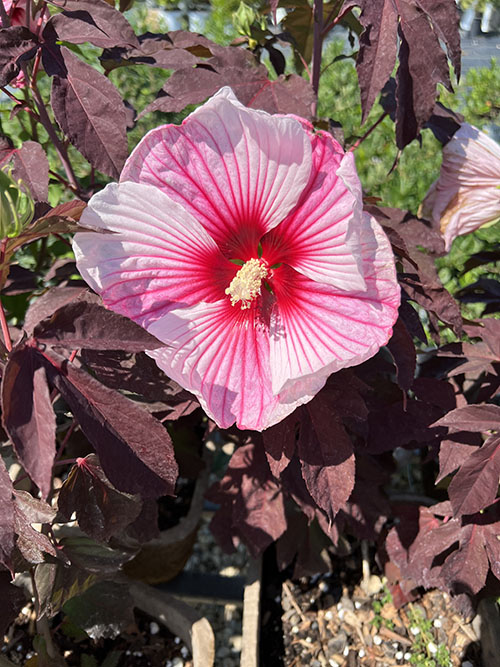
Hummingbirds are attracted to: Abelia, Ajuga, Hollyhock, Azaleas, Beebalm, Begonia, Blue Queen Salvia, Bottlebush, Canna, Columbine, Dahlia, Delphinium, Foxglove, Geranium, Gladiolus, Hibiscus, Impatiens, Petunia and Trumpet creeper.

Butterflies are attracted to: Abelia, Azeleas, Beebalm, Blackfoot Daisy, Blue Queen Salvia, Butterfly Bush, Cosmos, Daylily, Dianthus, Fennel, Hackberry, Heliotrope, Honeysuckle, Impatiens, Mexican Petunia, Milkweed, Parsley, Petunia, Purple Coneflower, Sedum, Snapdragons, Sweet Alyssum, Verbena and Zinnia.

Other wild birds are attracted to: Asters, Beautyberry, Am., Calendula, Cosmos, Dogwood, Dusty Miller, Elderberry, Hackberry, Portulaca, Purple Coneflower, Sunflower, Viburnum and Zinnia.

These flowers, shrubs and plants are good starting points, but there are many other options to explore in you wildlife attracting endeavor.

For more tips, tools and advice contact Adams Gardens at 208.461.6101 or stop by.

Adams Gardens
4500 E Greenhurst Rd.
Nampa, Id 83686

How To Grow Onions and Potatoes


It may seem less than economical to grow your own onions and potatoes, however, the taste of these fresh vegetables more than return that investment. It takes only a minimum of effort which will lead to a bountiful harvest. In this article we will discuss a couple of different growing tactics as well as planting, fertilization, and harvest.

Due to the possibility of transference of disease and other factors, onion sets and seed potatoes must carry certification from the Idaho Department of Agriculture. This can limit some of the varieties that are available. Do not fret though, even common varieties will have a great and unique flavor in the home garden.

The first stage will be the preparation of the soil or growing medium. For those who will be planting directly into the ground it is a good idea to work compost, preferably a forest or Claybuster, along with some soil sulfur and bone meal prior to planting. A quick trip to our nursery and we can help you decide quantities and mixing ratio for success. Now if growing above ground a variety of approaches can be used, such as: raised beds, containers, weed fabric sacks, and even old tires. The idea behind growing above ground comes with several advantages. These include the ability to better control growing medium and fertilization as well as easier harvests and in many cases conservation of gardening space. With these methods a great deal of different potting mediums can be used. It is best to consult with us to help you decide what will be the best and most economical path for your endeavor.

We should discuss the ways to plant onions. Onions have three stages that they can be started from. The seed stage will be sown at a depth of a quarter inch around a month before last frost (or midsummer for a fall harvest). Starting from seed will most likely result in onions ranging from greens to small in size. The seedling stage usually comes in packs jammed with many starts. These should be separated and planted with just the white below soil level. Seedlings should yield onions small to medium in size, sometimes large if started early, and can be planted as soon as frost stops. The last stage is an onion set, basically a small onion, which can be planted approximately a month before last frost at a depth of one to two inches (Depending on bulb size). An onion set should yield medium to large onions. As a note it is important to remove any attempt at flowing while the onion is growing because the energy of the plant will be directed there.

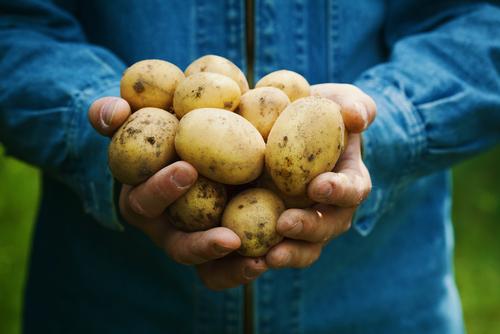
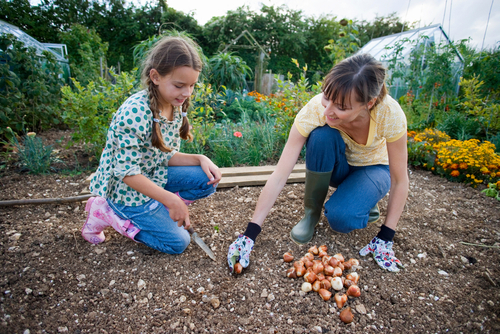
Onward to planting potatoes. Potatoes are sold in a seed potato form that basically looks like a regular eating potato. This is then cubed into pieces containing between one and three eyes. These cubes are then left to dry for one to two days, away from direct sun. These are sown at a depth of about four inches around six weeks before the last frost. A watchful eye should be kept out for Colorado Potato Beetles, as the name implies, you might be able to guess their favorite food.

Watering can be crucial. Usually a healthy garden will need to stay moist in the beginning and finally when established be able to handle some drought. Our experience has been that some gardens are doomed with a “killing it from kindness” approach. Root crops such as onions and potatoes can be specially sensitive to the application of excessive water due to the possibility of root rot. This can be greatly increased or reduced by two simple variables: frequency/duration of watering and the growing medium.

A good growing medium is often sufficient for growing onions and potatoes, however, with proper fertilization the bounty can be increased significantly. The fertilization can range from combating our alkali soil to pumping maximum growth and productivity in our garden. We can range this application from light to aggressive organic or not. It would be best to discuss your personal gardening goals and interests with us to allow for the best possible program on this front. Also, it is essential to monitor the plants’ health and take samples to the nursery early if anything suspicious occurs. Fast diagnosis is often key to recovery and the ultimate goal of a tasty and abundant harvest.

Harvesting is fairly simple for these two crops. Potatoes are generally dug with a spade starting a safe distance from the plant and slowly working closer so as not to damage the edibles. This can sometimes be avoided with above ground methods that allow a full to segmented harvested without a shovel. Onions on the other hand need to have the tops snapped and laid over at the soil line. By damaging the green but allowing some to remain attached the plant will bring energy from the green to be stored in the desired root. This should be done approximately two weeks to harvest.

Hopefully you will enjoy bringing these two culinary classics to life in your backyard. The flavor and freshness should be exquisite. As always feel free to come to the nursery with any questions or concerns on your garden.  Thank you and best of luck in your quest for fresh sustenance.

Composting Tips

It is trash day and you have a few cans on your curb waiting to be picked up. Think about all the things that go into your garbage can. Perhaps some of those things include lawn clippings, leftovers from meals over the last week or other organic materials. Many people have found that a compost bin is the most economical and environmental solution to getting rid of their organic wastes while providing their gardens with highly nutrient soil.

We can look at communities across the country for examples of success. Nantucket, an Island in Massachussettes, began their move toward zero waste about a decade ago. Read more about how they used composting to stop their community’s production of waste.

http://www.nytimes.com/2009/10/20/science/earth/20trash.html?ref=compost

Composting is a simple process which involves a pile or bin where all organic waste (leaves, lawn clippings, kitchen scraps and other organic materials) is collected, mixed and moistened regularly. This mixture is then used as nutrient rich soil for gardening. Here are a few tools you will need before getting started:

Tools:

Some specific examples of materials to include in you compost are:

Green Materials:

Brown Materials:

A good mixture of four parts “browns” to one part “greens” will produce the best results. Regular mixing and moistening will encourage decomposition of the materials with air flow and insects. Having great composting ready for the garden will take several weeks.

For more tips and advice about composting, contact Adams Gardens at 208.461.6101.